


Told your tooth must come out? Ask whether it can be saved first.
Some teeth cannot be saved, and extracting them is the right call. Many can, and a second opinion costs you little. We examine the tooth and explain either way.
A tooth is usually extracted when the root is split, too little tooth remains or gum disease has loosened it. If decay or infection is the only problem, a root canal may keep it.
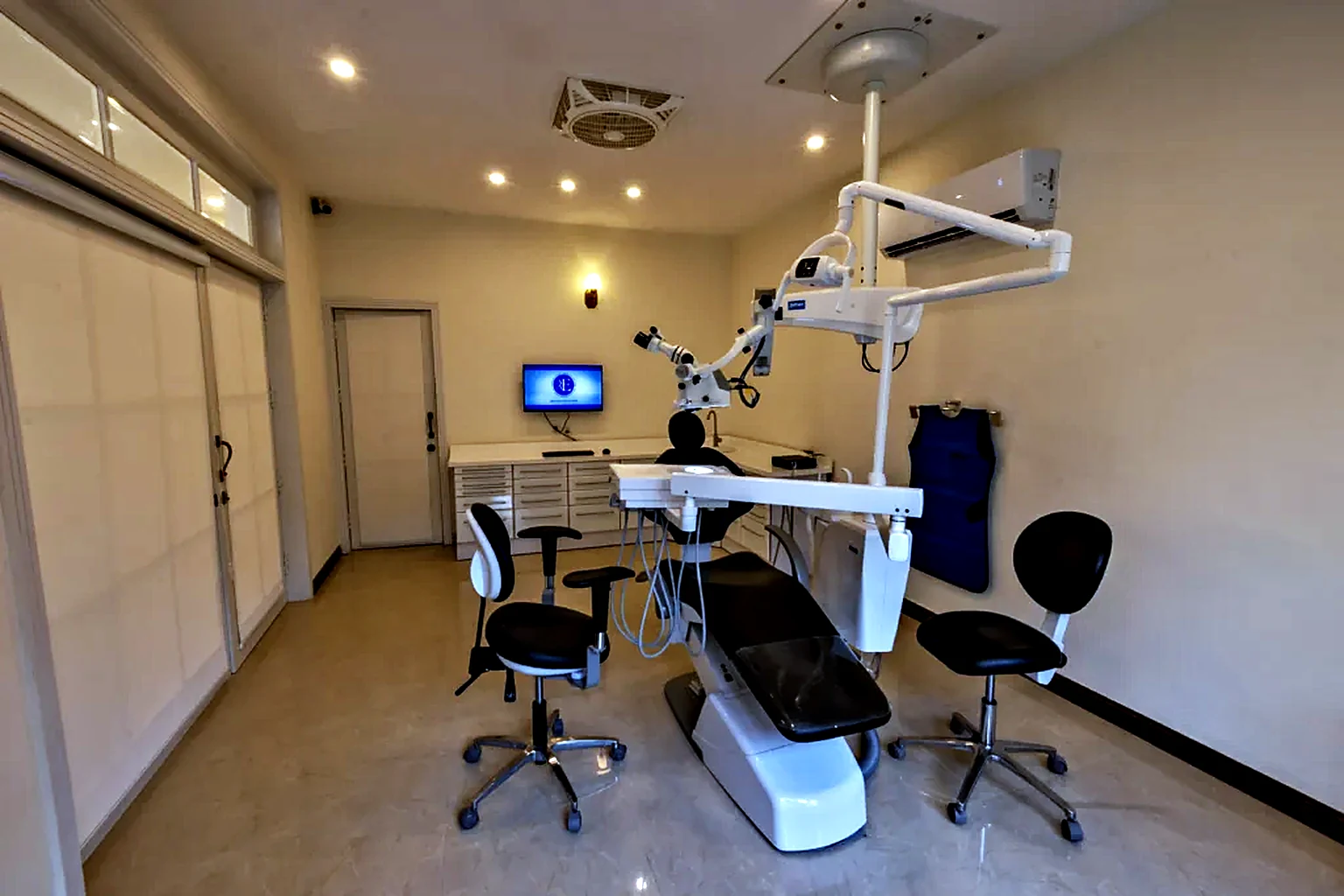
Examined under a microscope. Options and costs explained before any treatment.
Last updated 17 October 2026
Questions to ask before an extraction
- Is the tooth infected, cracked or simply decayed?
- Could a root canal, retreatment or a crown save it?
- What will replace it, and when?
- What happens to the neighbouring teeth if the gap stays?
What happens, step by step
Look
Examination and X-rays, with a microscope check if a crack is suspected.
Explain
We tell you whether the tooth can be kept, and the options for each path.
Remove
If extraction is the right choice, we remove the tooth gently under local anaesthetic.
Plan
We discuss replacing the tooth with an implant, bridge or denture, if you want to.
Aftercare, in short
For the first 24 hours, avoid rinsing hard, spitting, using a straw, smoking and hot drinks, so the clot can form. Eat soft food and keep the area clean after that with gentle salt-water rinses.
Call us if pain increases after the third day, which can indicate a dry socket, or if you have swelling, fever or heavy bleeding.
Questions patients ask
Is extraction painful?
It is done under local anaesthetic. Soreness for a few days afterwards is normal.
Should I replace the tooth?
Usually, yes, because neighbouring teeth drift and the opposing tooth can move. We discuss options and timing.
What about wisdom teeth?
We assess each. Not every wisdom tooth needs removing, and some are better referred. We will advise.
How soon can I eat?
Once the numbness wears off, soft cool food on the other side.
What if I am anxious?
Tell us. We explain each step and go at your pace.
You may also want to read
Root canal treatment
Deep decay, a toothache that lingers, or a nerve that is infected.
Read moreRoot canal retreatment
A root canal that is sore again, infected again or never settled.
Read moreDental implants
A fixed replacement for a missing tooth, built in the jawbone.
Read moreDental crowns
Strong, natural-looking caps for weakened or root-treated teeth.
Read more