


Told you need a root canal? Here is what it really involves.
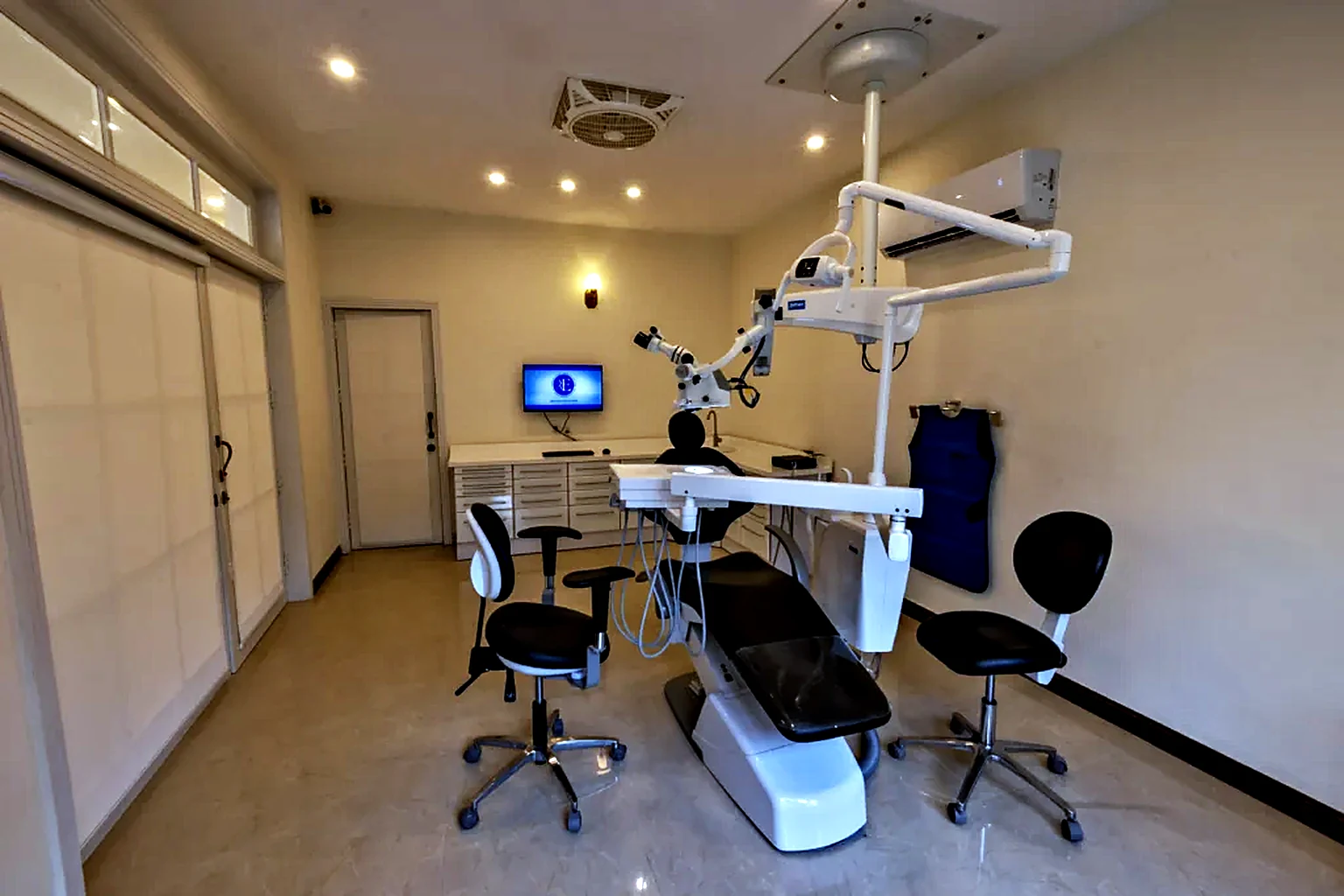
A root canal removes the infected or inflamed tissue inside a tooth, cleans the canals and seals them, so the tooth can stay in your mouth. We do it under a surgical microscope, in unhurried visits, after explaining every step.
Root canal treatment saves a tooth whose nerve is damaged by deep decay, a crack or injury. It is done under local anaesthetic. Most teeth are then protected with a crown.
Examined under a microscope. Options and costs explained before any treatment.
Last updated 17 October 2026
Signs a tooth may need a root canal
- A toothache that wakes you at night or lingers after hot or cold drinks
- Pain when you bite or press on the tooth
- A small pimple or swelling on the gum near the tooth
- A tooth that has darkened compared with its neighbours
- Deep decay, or a large filling that has failed
What happens, step by step
Look
We examine the tooth, take an X-ray and test how it responds, so the diagnosis is confirmed before treatment.
Explain
You hear what we found, whether a root canal is the right choice, the alternatives and the cost.
Clean
Under local anaesthetic and a microscope, we open the tooth, find every canal and clean it.
Seal and protect
The canals are filled and sealed. A crown or strong filling then protects the tooth, often in a second visit.
Why we treat root canals under a microscope
Back teeth can have three or four canals, and some are thinner than a hair. A canal that is missed keeps its infection, and the trouble returns. The microscope lights and magnifies the inside of the tooth so we can follow each canal and check our work before it is sealed.
Dr. Iqbal is an endodontist, a specialist whose training and daily work centre on the inside of the tooth.
Root canal, extraction or waiting: how they compare
If a tooth is infected or its nerve is damaged, these are the realistic choices.
| Option | What it involves | Worth knowing |
|---|---|---|
| Root canal treatment | Clean and seal the inside of the tooth, then restore it | Keeps your own tooth. Back teeth usually need a crown afterwards |
| Extraction | Remove the tooth, then decide on a replacement | Quicker, but a gap needs replacing with an implant, bridge or denture to protect the bite |
| Waiting | No treatment | The infection does not clear by itself and can spread. Pain may ease while the problem grows |
Questions patients ask
Does a root canal hurt?
The treatment is done under local anaesthetic, so you should feel pressure rather than pain. The tooth may be tender for a few days afterwards, and we tell you what to expect and what to take.
How many visits will it take?
Often one or two, depending on the tooth and on whether there is an active infection. We will give you an estimate at your consultation.
Do I need a crown afterwards?
Usually, for back teeth, because a tooth that has had a root canal is more brittle. Front teeth sometimes only need a filling. We advise tooth by tooth.
What if I do nothing?
Infection inside a tooth does not heal by itself. It can spread to the bone and gum, cause swelling and in the end the tooth may be lost.
Can I be sure the tooth should not just come out?
Ask for a second look. Many teeth that are advised for extraction can be treated, and some cannot. We will examine yours and explain the reasons either way.
You may also want to read
Root canal retreatment
A root canal that is sore again, infected again or never settled.
Read moreMicroscopic endodontics
Seeing inside the tooth clearly, so nothing is missed.
Read moreDental crowns
Strong, natural-looking caps for weakened or root-treated teeth.
Read moreExtractions
When a tooth cannot be saved, and how to be sure before it comes out.
Read more